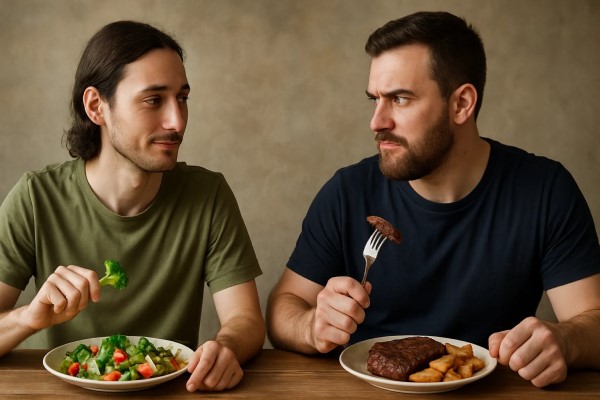
The tension between meat-eaters and vegans often has little to do with the food itself. Instead, it’s about what those plant-based choices represent. For some, seeing someone live by values they find difficult to follow stirs up discomfort. That discomfort can quietly morph into an us-versus-them mindset, where vegans are left out or criticized—not for what they eat, but for the mirror they unintentionally hold up to others.
It’s not just about what’s on the plate. When someone orders the veggie burger with confidence, it can spark a quiet storm of emotions in the meat-eater next to them. But why?
When Salad Feels Like a Personal Attack
A recent study published in Food Quality and Preference reveals that many meat-eaters don’t just shrug at plant-based lifestyles—they react with irritation, envy, and even outright anger. But the vegetables themselves aren’t to blame. It’s the meaning we attach to them.
Researchers asked thousands of people across Europe to evaluate fictional grocery shoppers based on their food lists. Some lists were heavy on red meat, others leaned vegetarian, and a few landed somewhere in between. The only real difference? The amount of meat.
The verdict? The more plant-based the list, the more participants assumed the shopper was moral, health-conscious, and disciplined. And that didn’t always sit well.
Lead researcher Roosa-Maaria Malila explained that such traits triggered complex emotional responses—especially among those who eat a lot of meat. Some people even admitted they’d prefer not to associate with vegetarians at all. In extreme cases, participants expressed a desire to be hostile toward them.
Food as Identity—and Why That Matters
Changing eating habits is hard. Most people know they should probably reduce their meat intake—for health, for the planet, for the animals. But watching someone else do it successfully can stir up guilt or defensiveness. That frustration often gets misdirected at the person with the kale smoothie.
As the researchers put it: “This frustration may be projected onto those who are already driving the change.”
Even with shelves full of plant-based alternatives, there’s still resistance. Not just because some believe lentil burgers don’t taste great—but because choosing them can feel like rejecting a group identity. What we eat, after all, says something about who we are—and who we belong with.
“Food is a powerful marker of social identity,” Malila said. “When vegetarian choices evoke negative emotions, people are less willing to be associated with them.”
A New Approach to Plant-Based Messaging?
The researchers don’t believe this stigma is permanent. They argue that campaigns around plant-based eating might work better if they focused less on saving the planet and more on helping the individual. What’s in it for you?
We’re hardwired to crave belonging and acceptance. So perhaps instead of preaching about global benefits, it’s time to highlight the personal wins—more energy, better digestion, maybe even clearer skin.
Because in the end, the real issue isn’t the salad. It’s what the salad represents.
 Twice Mag