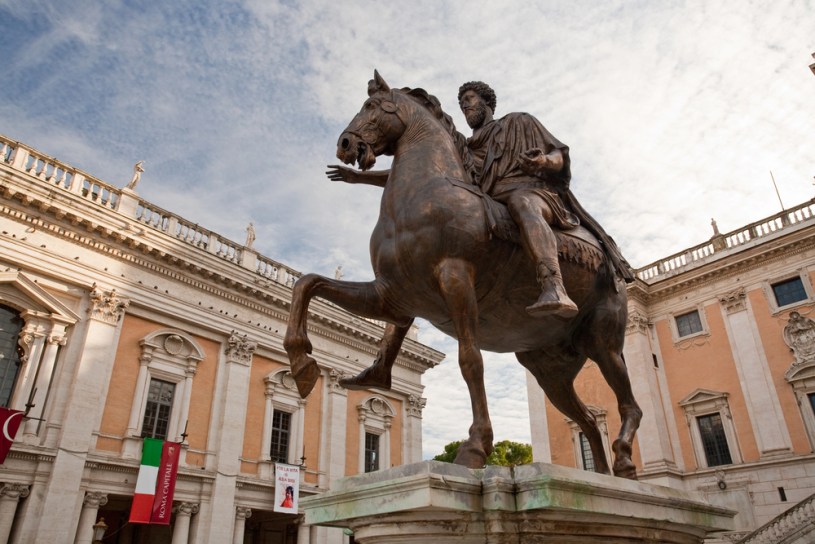
Few figures in history embody the union of power and philosophy as completely as Marcus Aurelius, Roman Emperor from 161 to 180 CE. While many rulers have consulted philosophers, Marcus Aurelius was a philosopher — specifically, a devoted practitioner of Stoicism. This ancient Greek school of thought taught resilience, virtue, and rationality in the face of life’s hardships. For Marcus, Stoicism wasn’t just an abstract idea but a guiding framework for leadership, personal conduct, and decision-making during one of the empire’s most tumultuous periods.
What Is Stoicism?
Before we can fully appreciate how Stoicism shaped Marcus Aurelius’s reign, it’s essential to grasp the core principles of this ancient philosophy. Stoicism was founded in the early 3rd century BCE by the philosopher Zeno of Citium, who taught his ideas in the stoa poikile — the painted colonnade of the Athenian marketplace, from which the philosophy takes its name.
At its heart, Stoicism teaches that the highest good lies in living a life of virtue, which for the Stoics meant living in harmony with reason, nature, and the rational order of the universe. Human beings, as rational creatures, have the unique capacity to choose their responses to the world around them. While we cannot control external events — such as fortune, fame, illness, or death — we can control how we think about and react to them. For the Stoic, true freedom comes from mastery over one’s own mind.
The philosophy is built upon a foundation of timeless values, many of which Marcus Aurelius would come to embrace and embody during his rule. These include:
- Self-discipline: Cultivating control over one’s desires, habits, and emotions, ensuring that actions are guided by reason rather than impulse.
- Acceptance of fate (Amor Fati): Understanding that much of life lies beyond personal control and choosing to embrace rather than resist the unfolding of events.
- Emotional resilience: Maintaining inner peace and clarity of judgment in the face of adversity, hardship, or personal loss.
- Moral integrity: Acting in accordance with virtue and justice, regardless of personal gain or public opinion.
- Rationality over impulse: Prioritizing thoughtful, measured responses over emotional or irrational reactions.
The groundwork for these ideas was laid by earlier Stoic philosophers such as Epictetus, a former slave whose teachings on personal freedom and resilience deeply influenced Marcus, and Seneca, a Roman statesman and writer who advocated for ethical leadership and temperance in public life.
For Marcus Aurelius, Stoicism was not a purely academic pursuit but a practical philosophy — a system for navigating the relentless challenges of imperial responsibility, personal sorrow, and the unpredictability of human affairs. It offered him a moral compass and a source of inner strength, shaping both his character and his conduct as one of history’s most admired philosopher-kings.
Meditations: Philosophy during Crisis
Among the many works of ancient philosophy, none feel as intimate, raw, and human as Marcus Aurelius’ Meditations. Far from being a public manifesto or carefully curated treatise, Meditations is a collection of the emperor’s private reflections — personal notes to himself written not for the world, but as a daily exercise in self-discipline and philosophical clarity.
Composed in Greek, the language of philosophy in the Roman world, Marcus wrote these entries during some of the most difficult periods of his reign, particularly while on military campaigns along the empire’s embattled northern frontiers. The Meditations offer a rare window into the inner life of a man burdened with immense power, personal loss, and relentless responsibility.
For Marcus, Stoicism was not a luxury or a pastime reserved for leisure and contemplation — it was a survival tool. Confronted with war, plague, betrayal, and the heavy loneliness of command, Marcus turned to Stoic philosophy to steady his mind and renew his sense of purpose. His writings served as reminders to uphold virtue in a world filled with cruelty, uncertainty, and suffering.
In Meditations, he frequently reaffirms Stoic principles to himself:
- On Enduring Hardship:
“You have power over your mind — not outside events. Realize this, and you will find strength.” (Meditations 8.47)
This reflection underscores the core Stoic belief that external misfortunes are inevitable, but our inner response to them defines our character. - On Mortality and the Fragility of Life:
“Do not act as if you were going to live ten thousand years. Death hangs over you. While you live, while it is in your power, be good.” (Meditations 4.17)
Marcus repeatedly reminds himself of life’s brevity and the importance of living each moment with integrity. - On Duty and Service:
“When you arise in the morning, think of what a precious privilege it is to be alive — to breathe, to think, to enjoy, to love.” (Meditations 8.36)
Even amid the harsh realities of war and political intrigue, Marcus calls himself back to gratitude and the responsibility of leadership.
What makes Meditations so compelling is its authenticity. Unlike other philosophical texts of the time, it contains no grand speeches or rhetorical flourishes meant to impress. It is the vulnerable, sometimes weary voice of a man wrestling with his own weaknesses, fears, and frustrations, striving to remain just, temperate, and wise in a turbulent world.
Through Meditations, Marcus Aurelius shows us that philosophy is not an abstract discipline reserved for the classroom or the library — it is a way of life, especially in moments of crisis. His reflections are not only the private counsel of an emperor but timeless advice for anyone seeking clarity and resilience amid chaos.
Today, Meditations endures as one of the most beloved and accessible works of ancient philosophy, read by leaders, thinkers, and ordinary people alike for its profound wisdom on how to live well in an unpredictable world. It is perhaps the greatest testament to how deeply Stoicism shaped both Marcus Aurelius’s inner life and his public rule.
Living the Stoic Ideal: How Marcus Aurelius Embodied His Philosophy
Marcus Aurelius’s life was a testament to the principles of Stoic philosophy. He didn’t simply write about virtue, self-control, and wisdom — he lived them, especially when faced with extraordinary challenges.
1. Embracing Humility in Power
One of the core Stoic teachings is the importance of humility. For Marcus, this was not simply a theoretical idea but a cornerstone of his leadership. Despite being the emperor of Rome, the most powerful man in the known world, Marcus Aurelius consciously avoided the arrogance and self-aggrandizement that many rulers embraced.
- Living as a Servant of the People:
Unlike emperors who surrounded themselves with lavish luxury, Marcus lived in relative simplicity. He often dressed in modest clothing and carried out his duties with a sense of public service rather than seeking personal glory. Stoicism teaches that true greatness comes from serving others, not seeking fame. Marcus’s life was an embodiment of this virtue. - Avoiding Tyranny:
Stoics believe in ruling with justice and temperance, not in exploiting power for personal gain. Marcus was known for his fairness in administration and sought counsel from various groups of advisors. Even when faced with difficult decisions, he was committed to acting in the best interests of the Roman people rather than using his power to exact vengeance or maintain an image of invincibility.
2. Emotional Resilience Amid Crisis
Marcus Aurelius ruled during one of the most challenging periods of the Roman Empire, marked by multiple crises: wars on the Danube frontier, the Antonine Plague, and political instability. These crises tested not only his leadership but also his emotional resilience.
- Facing Adversity with Composure:
Stoicism teaches the importance of maintaining inner peace regardless of external events. Marcus Aurelius applied this principle in the face of tremendous hardship. The Meditations themselves are filled with reflections on how to maintain equanimity, even when things go wrong. His ability to remain calm and focused during times of personal and national crisis is a testament to his Stoic commitment to emotional control. - Acceptance of Suffering:
The plague that ravaged the empire and the long military campaigns were a huge burden on Marcus, yet he did not allow personal hardship to cloud his judgment or erode his sense of duty. In his writings, he reflects on how to endure suffering without complaint, seeing it as a natural part of life that can be transcended through the right mindset. His acceptance of fate — or Amor Fati, as the Stoics call it — allowed him to face adversity without bitterness.
3. Commitment to Virtue in Personal Conduct
For Marcus, the pursuit of virtue was not limited to his public persona but was deeply integrated into his private life. He consistently worked on improving himself, guided by Stoic principles.
- Cultivating Inner Excellence:
In Meditations, Marcus reflects on the importance of self-examination. Stoicism holds that we should constantly assess our actions to ensure they align with virtue. Marcus Aurelius took this to heart, continually striving to be just, wise, and temperate. He was aware of his own flaws and worked to improve them, demonstrating that Stoicism is a lifelong practice. - The Virtue of Self-Denial:
One of the Stoic values that Marcus emphasized was self-control. This is reflected in his personal habits, including his temperance and control over desires. He avoided indulgence in luxuries and excess, seeing them as distractions from the higher goal of living virtuously. His self-discipline extended to his daily routines, as he maintained a strict regimen of study, reflection, and action.
4. Leading by Example in Times of War
Marcus Aurelius spent a significant portion of his reign leading military campaigns to defend the empire’s borders against invading Germanic tribes. His leadership during these turbulent times showed his ability to embody Stoic ideals in the most challenging circumstances.
- Stoic Leadership in Battle:
Despite being an emperor, Marcus did not delegate responsibility entirely to his generals; he was often at the front lines himself. Stoicism teaches that a leader should share in the hardships of those they lead. Marcus’s presence in the field, his hands-on approach, and his commitment to the welfare of his soldiers reflected his dedication to Stoic leadership. - Patience and Strategy:
During his military campaigns, Marcus was known for his patience and strategic thinking, characteristics highly valued by Stoics. He didn’t rush into decisions or act out of emotional impulse but rather evaluated situations with a clear, rational mind. He was careful with his resources and considered the long-term impact of his decisions on both the soldiers and the empire.
5. Reflections on Mortality and the Nature of Life
A defining feature of Stoicism is the acceptance of mortality and the transient nature of life. Marcus Aurelius frequently reflected on death, not with fear, but with understanding. His contemplation of death was not just philosophical — it had a profound impact on how he lived.
- Living with the Awareness of Death:
Marcus constantly reminded himself of the fleeting nature of life, urging himself to live with purpose. In Meditations, he writes: “You could leave life right now. Let that determine what you do and say and think.” This awareness shaped his decisions, reminding him to act with integrity and not waste time on trivial matters. - Coping with Personal Loss:
Marcus’s life was marked by personal grief, especially the death of his beloved son, Commodus, who would eventually succeed him as emperor. Though Stoics teach the importance of accepting grief, Marcus’s writings show the pain of loss, but also a commitment to endure it with dignity, maintaining his role as a leader despite personal tragedy.
6. Practical Applications of Philosophy in Governance
Lastly, Marcus Aurelius applied Stoicism in his governance. His rule was characterized by a commitment to justice, fairness, and compassion.
- Upholding Justice:
Marcus was known for his fairness, and he worked to ensure that justice was not influenced by wealth, power, or status. He often made decisions that were unpopular among the elites but were in the best interest of the common people, adhering to Stoic ideals of moral integrity and fairness. - Adapting Stoic Principles to Governance:
He often invoked Stoic ideas to address governance issues. For example, during his reign, Marcus worked to ensure the welfare of the poor and the health of the empire, showing that Stoic concern for the common good was not just a personal ethic, but one that extended to the role of ruler.
Stoicism in Action: How Philosophy Guided His Rule
For Stoicism, the ideal leader is one who governs not for personal gain or glory, but for the common good, guided by virtue and reason. Marcus Aurelius came closer to this ideal than perhaps any Roman emperor before or after.
His legacy as a philosopher-king rests not on military conquest or architectural triumphs, but on the example of ethical leadership and integrity under pressure. His life demonstrated that even at the height of power, one could practice humility, discipline, and compassion — Stoic virtues in their highest form.
Here are a couple of examples:
1. The Antonine Plague (165–180 CE)
During Marcus’s reign, the Roman Empire was struck by the Antonine Plague, likely smallpox, which claimed millions of lives. While fear and chaos spread, Marcus embodied Stoic calm. He organized relief efforts, maintained order, and continued military campaigns when necessary. In Meditations, he reminded himself to accept the nature of fate while fulfilling his duty.
Stoicism in action:
Instead of fleeing from disease-ridden Rome, Marcus stayed to govern and care for his people — a decision consistent with the Stoic belief that one must fulfill their role in society regardless of personal risk.
2. Wars on the Danube Frontier
Marcus spent much of his reign on military campaigns defending Rome’s northern borders from Germanic tribes. Life on campaign was harsh, but Stoicism equipped him with the mental resilience to endure.
Stoicism in action:
Even in the discomfort of military camps, Marcus maintained a disciplined routine of reflection and self-examination. His Meditations were penned during these campaigns, illustrating how he applied Stoic teachings to cope with war, separation from family, and leadership burdens.
3. Restraint in Power and Justice
Unlike many emperors, Marcus showed clemency toward political rivals and dissenters. He believed in governing by reason and virtue rather than fear.
Stoicism in action:
After a conspiracy against him led by Avidius Cassius in 175 CE, Marcus pardoned many of the conspirators and did not seek widespread retribution — a striking act of restraint reflecting the Stoic value of controlling anger and acting according to justice, not impulse.
Marcus Aurelius: Stoicism as antidote to hypocrisy
Marcus Aurelius’s reign reminds us that philosophy is most valuable when tested by adversity. His Stoic beliefs shaped how he faced plagues, wars, betrayals, and the burdens of absolute power.
Meditations continues to inspire readers today because it offers not the detached wisdom of a cloistered thinker, but the battle-tested insights of a man who strove for virtue in the harshest of circumstances.
In Marcus, Stoicism found both its most powerful student and one of its most enduring embodiments.
Marcus Aurelius is a rare example of a leader who lived as he preached.
 Twice Mag