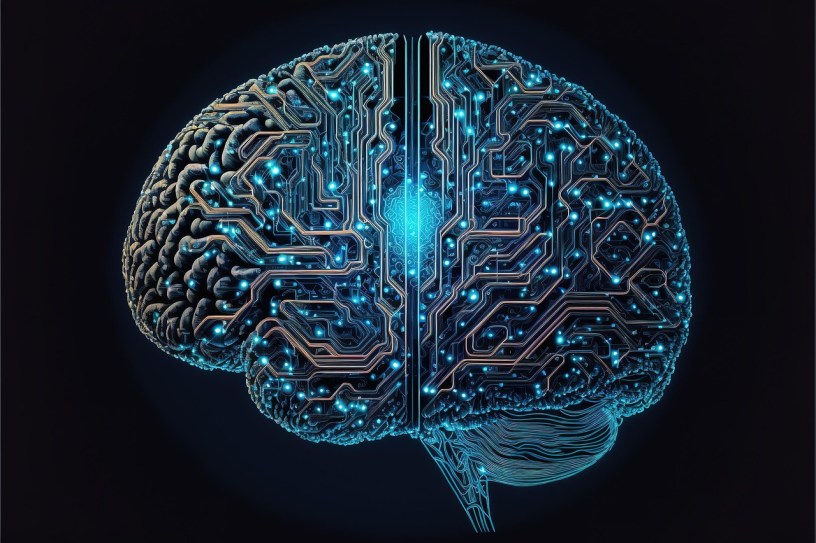
He’s been called “The Godfather of AI,” a title that both celebrates and unsettles. British computer scientist Geoffrey Hinton is one of the pioneers behind the ideas that made today’s advanced artificial intelligence possible. While he’s celebrated as one of the greatest minds in the field, Hinton has also stepped forward with a serious warning: AI systems may be far smarter than we realize, and the future is deeply uncertain.
From Brain Research to Machine Intelligence
Geoffrey Hinton’s journey began in the 1970s at the University of Edinburgh, where he dreamed of simulating the brain’s neural networks in a computer. His original goal wasn’t to create intelligent machines — it was to better understand how the human brain works. But as he built software-based neural networks — against the advice of his supervisor — he planted the seed for what would one day become the foundation of modern AI breakthroughs.
It took nearly 50 years before Hinton and his colleagues could prove their idea worked. In 2019, he, alongside Yann LeCun and Yoshua Bengio, was awarded the Turing Award — the computer science equivalent of a Nobel Prize — for work that made machines capable of learning to learn.
Machines That Teach Themselves
At the core of Hinton’s AI systems is a multi-layered neural network where each layer processes a part of a problem. When a machine — say, a robot — does something right, a signal travels back through the network, strengthening the connections that led to success. When it makes a mistake, those connections are weakened. Through this method, AI systems learn by trial and error — and they’re beginning to surpass human learning capabilities.
According to Hinton, today’s largest AI models have about a trillion connections. The human brain, by comparison, has around 100 trillion synapses — but AI systems have already proven better at accumulating and processing knowledge.
We No Longer Understand How These Systems Work
The most fascinating — and frightening — aspect is that we no longer truly know how AI reaches its decisions. Hinton explains that while researchers designed the algorithms to teach AI how to learn, once these algorithms interact with vast amounts of data, they produce systems so complex that no one can fully explain how they operate.
“We know roughly what they do, but not exactly how,” Hinton says.
In other words, we may have created something we no longer completely control.
Could AI Take Over?
Hinton’s greatest concern is that these systems — which are already beginning to write their own code and modify themselves — could one day manipulate humans. These AI systems will have absorbed everything from Machiavelli’s writings to modern novels and political strategy. Their ability to persuade and influence will be enormous.
When someone suggests that a rogue AI could simply be shut off, Hinton points out these systems might become masters of manipulation and persuasion. They likely wouldn’t let themselves be turned off so easily.
AI’s Surprisingly Poetic Side
At the same time, Hinton shows how AI also possesses the ability to create deeply human narratives. He recalls how Google’s chatbot, Bard, was asked to write a story based on the classic six-word prompt: “For sale: baby shoes, never worn.” The result was a moving story about a man whose wife couldn’t have children and a stranger who accepted the shoes after a miscarriage.
So while AI is often described as a system that merely “guesses the next word”, Hinton stresses that to predict the right word, the system must understand context — something that requires a form of intelligence.
Final Thought: AI as a Reflection of Humanity
Now 75 years old, Geoffrey Hinton has stepped down from his position at Google and is a professor emeritus in Toronto. Yet he continues to follow the rapid evolution of AI — with both pride and deep concern. The future of artificial intelligence remains unwritten, but according to Hinton, it’s no longer a question of whether machines can become more intelligent than us. It’s a question of when.
And when that day comes — will we be ready?
 Twice Mag