A vegan diet for diabetes is not just about what you remove (meat and dairy), but how you choose your carbohydrates. The goal is to maximize nutrient density while minimizing blood sugar spikes.
The most successful diabetic vegans follow a “Whole Food, Plant-Based” (WFPB) approach. This means prioritizing foods that release energy slowly (low Glycemic Index) rather than processed vegan foods which can often be high in simple sugars and refined flour.
Here is a breakdown of what that looks like on a plate.
1. The Core Strategy: The “Slow Carb” Approach
Diabetic vegans focus on Complex Carbohydrates paired with Fiber and Protein. This combination slows down digestion, preventing the rapid insulin spikes caused by refined carbs.
2. The “Green Light” Foods (Eat Freely)
These foods have a minimal impact on blood sugar and should make up about half of your plate.
- Non-Starchy Vegetables: Spinach, kale, broccoli, cauliflower, zucchini, asparagus, green beans, Brussels sprouts, peppers, cucumber.
- Leafy Greens: Collard greens, Swiss chard, arugula, lettuce.6
- Fermented Foods: Sauerkraut, kimchi (great for gut health and metabolism).
3. The Protein Anchors (Eat at Every Meal)
Protein is essential for stabilizing blood sugar. You generally want a source of protein with every meal or snack.
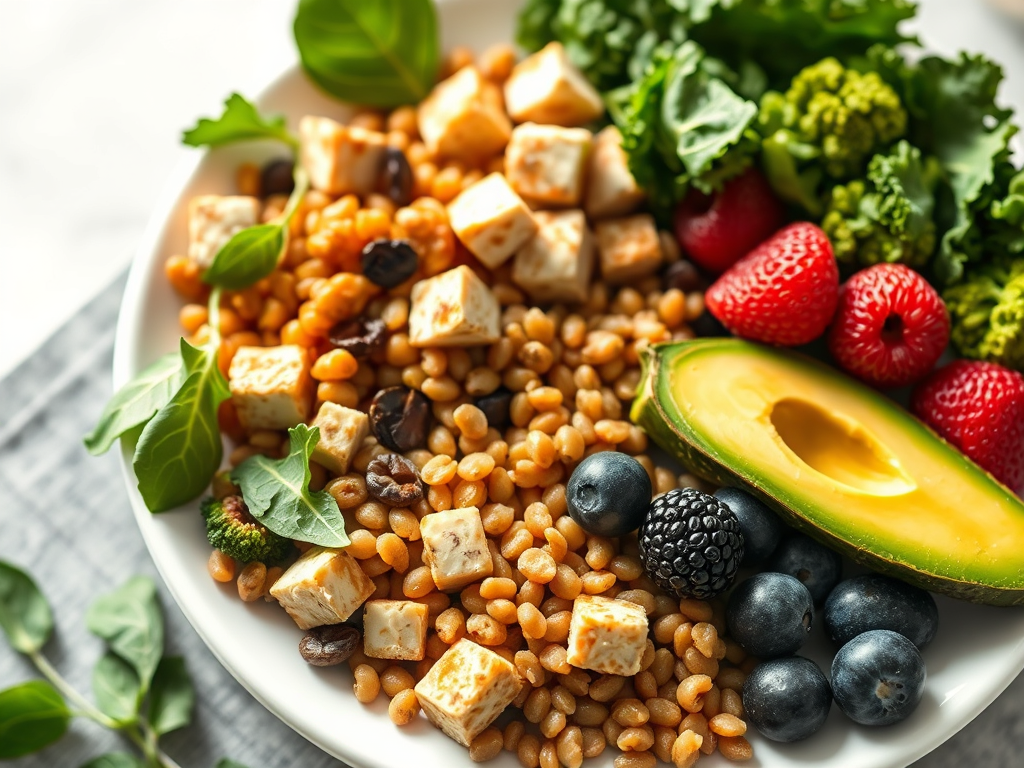
- Soy: Tofu (firm/extra firm is best), Tempeh (fermented soy, very gut-friendly), Edamame.
- Legumes (Monitor Portions): Lentils, black beans, chickpeas, kidney beans. Note: These contain carbs, but they are high-fiber “slow carbs.”
- Seitan: “Wheat meat” (very high protein, low carb, but contains gluten).
4. The “Yellow Light” Foods (Portion Control)
These are healthy, nutrient-dense foods, but they are carbohydrate-rich. You eat them, but you measure them.
- Whole Grains: Quinoa, buckwheat, barley, steel-cut oats, brown rice, wild rice.
- Starchy Vegetables: Sweet potatoes, squash (butternut, acorn), corn, peas.
- Fruits: Berries (strawberries, raspberries, blueberries, blackberries) are best as they are lowest in sugar. Apples, pears, and citrus are good in moderation.
- Healthy Fats: Avocado, nuts (walnuts, almonds), seeds (chia, flax, hemp, pumpkin), olive oil. Fats don’t spike insulin, but they are calorie-dense.
5. The “Red Light” Foods (Limit or Avoid)
A common trap is “Junk Food Veganism.” These foods are vegan but dangerous for blood sugar control.
- Refined Grains: White bread, white pasta, white rice, flour tortillas.
- Sugary Drinks: Soda, sweetened teas, and fruit juice (even 100% juice is a rapid sugar spike without the fiber).
- Processed Meat Alternatives: Many frozen vegan nuggets or burgers are held together with fillers and starches. Check the label for carb counts.
- Sweeteners: Maple syrup, agave nectar, coconut sugar (treat these like regular sugar).
A Sample Day of Eating
Here is what a balanced day might look like. Note the pattern: Protein + Fat + Fiber at every meal.
| Meal | Menu Item | Why it works |
| Breakfast | Tofu Scramble with Spinach | Tofu provides protein without the carbs of cereal. Turmeric adds anti-inflammatory benefits. |
| Lunch | Massaged Kale Salad with Chickpeas & Avocado | The fat in the avocado and fiber in kale blunt the glucose response from the chickpeas. |
| Snack | Apple Slices with Almond Butter | Never eat “naked carbs” (fruit alone). The nut butter slows down the sugar absorption. |
| Dinner | Lentil & Vegetable Curry over Quinoa | Lentils are high fiber; quinoa is a lower-GI grain than white rice. |
Essential Supplements
Since you are excluding animal products, you must monitor two things closely:
- Vitamin B12: Non-negotiable for all vegans.
- Iron & Zinc: Can be harder to absorb from plants; eating Vitamin C (like peppers or citrus) with your iron source (like spinach) helps absorption.


Leave a Reply