
At first, deism and theism can sound almost the same. Both begin with the belief that a supreme creator brought the universe into existence. But the real question is much more personal: after creating the world, does God step back and let everything run on its own, or does God remain close, active, and involved?
That single question is what separates the two views. Looking at each one side by side makes the difference much easier to feel and understand.
1. Deism: God as the Cosmic Clockmaker
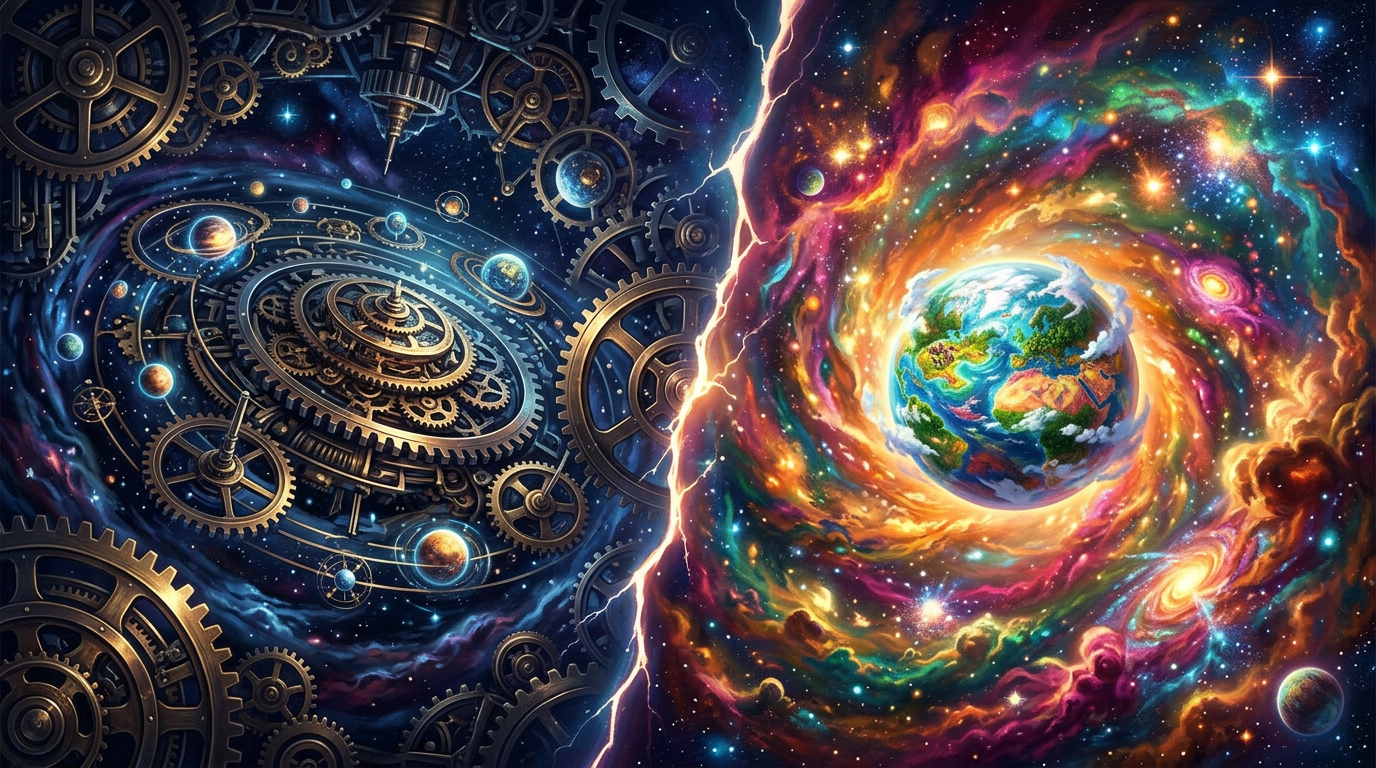
For a deist, God is the brilliant designer behind everything, but not a daily presence guiding events. One of the clearest ways to picture this idea is the famous “clockwork universe” metaphor.
Imagine the universe as an incredibly precise clock. God designs every gear, winds it up, sets it in motion, and then lets it keep ticking according to the laws already built into it.
In simple terms, deism usually emphasizes these ideas:
- No divine intervention: After establishing the laws of nature, God does not step in to change events. In this view, miracles, answered prayers, and supernatural course corrections are not part of how the world works.
- Reason over revelation: Deists generally do not rely on holy books, prophets, or direct revelations. Instead, they believe human reason and careful observation of nature are the best ways to understand the creator.
- An impersonal creator: Because God is not seen as actively intervening, deism does not usually describe a close, conversational relationship between humans and God.
2. Theism: God as the Sustaining Creator
For a theist, God is not a distant designer who leaves creation alone. God is present, active, and personally involved. If deism pictures God as a clockmaker who steps away, theism pictures God more like a musician whose song continues only because it is still being played.
In simple terms, theism usually emphasizes these ideas:
- Active presence: God is both beyond the physical world and deeply present within it. The universe is not just something God created long ago; it continues to depend on God’s ongoing support.
- A personal relationship: Theists believe God cares about humanity, listens to prayer, guides history, and can be known in a personal way.
- Revealed truth: Theists often believe God communicates through revelation, including sacred texts, miracles, and spiritual experiences.
A Quick Side-by-Side Comparison
| Feature | Deism | Theism |
| Ongoing Involvement | God steps back after establishing natural laws. | God remains involved, sustaining and guiding creation. |
| How to Know God | Through reason, nature, and science. | Through faith, scripture, reason, and personal experience. |
| Miracles & Prayer | Usually rejected because they would interrupt natural laws. | Possible because God can act within creation. |
| Nature of God | Distant, transcendent, and detached. | Personal, present, and relational. |
Sources for Further Reading
- Britannica, Academic Edition: Deism – Enlightenment, Rationalism, Beliefs
- Wikipedia: Theism
- The Philosophy Institute: The Origins and Definitions of Deism in Philosophy of Religion
- The Theosophical Society: Four Main Beliefs About the Nature of God


Leave a Reply